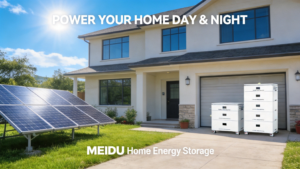
1. System Overview
The energy storage system (ESS) is engineered to deliver high-capacity, reliable, and scalable power solutions for residential, commercial, and off-grid applications. By combining advanced lithium iron phosphate (LiFePO4) chemistry with an intelligent Battery Management System (BMS), the system ensures high energy density, superior thermal stability, and maximum operational safety.
2. Core Technical Specifications
2.1 Battery Cell & Chemistry
- Cell Type: Premium Lithium Iron Phosphate (LiFePO4).
- Thermal Stability: Enhanced structural integrity designed to withstand high ambient temperatures without thermal runaway risks.
- Lifecycle: Extended cycle life ensuring minimal capacity degradation over years of continuous charge-discharge operations.
2.2 Intelligent BMS (Battery Management System)
- Real-Time Monitoring: Continuously tracks individual cell voltages, pack-level current, and internal temperatures.
- Protection Mechanisms: Built-in safeguards against overcharging, over-discharging, short-circuiting, and extreme temperature fluctuations.
- Balancing: Active/passive cell balancing to optimize overall pack capacity and extend system longevity.
2.3 Grid Integration & Compatibility
- Inverter Compatibility: Designed for seamless integration with mainstream hybrid and off-grid inverters.
- Energy Conversion: Optimized DC-to-AC conversion efficiency for solar, grid, and backup power modes.
- Switching Response: Rapid switchover time during grid failure to ensure uninterrupted power supply (UPS functionality) for critical loads.
3. System Architecture & Scalability
3.1 Modular Expansion
- Capacity Scaling: Modular architecture allows users to scale energy capacity seamlessly from baseline residential setups to high-demand commercial configurations.
- Parallel & Series Configuration: Supports flexible wiring topologies to match specific voltage and power output requirements.
3.2 Mechanical Design
- Footprint: Compact, space-saving enclosure design maximizing energy density per square meter.
- Enclosure Rating: Robust housing built for durability, featuring effective thermal dissipation channels and environmental protection.
4. Operation & Maintenance Guidelines
- Initial Setup: Ensure proper grounding and verify compatibility with local grid codes and connected inverter specifications prior to commissioning.
- Routine Inspection: Periodically inspect power cables, communication links (RS485/CAN), and mounting hardware.
- Firmware Updates: Regularly update the BMS and inverter communication firmware to maintain optimal system performance and safety protocols.